News›11/10/2022
Factors of extract air cleaning in professional kitchens
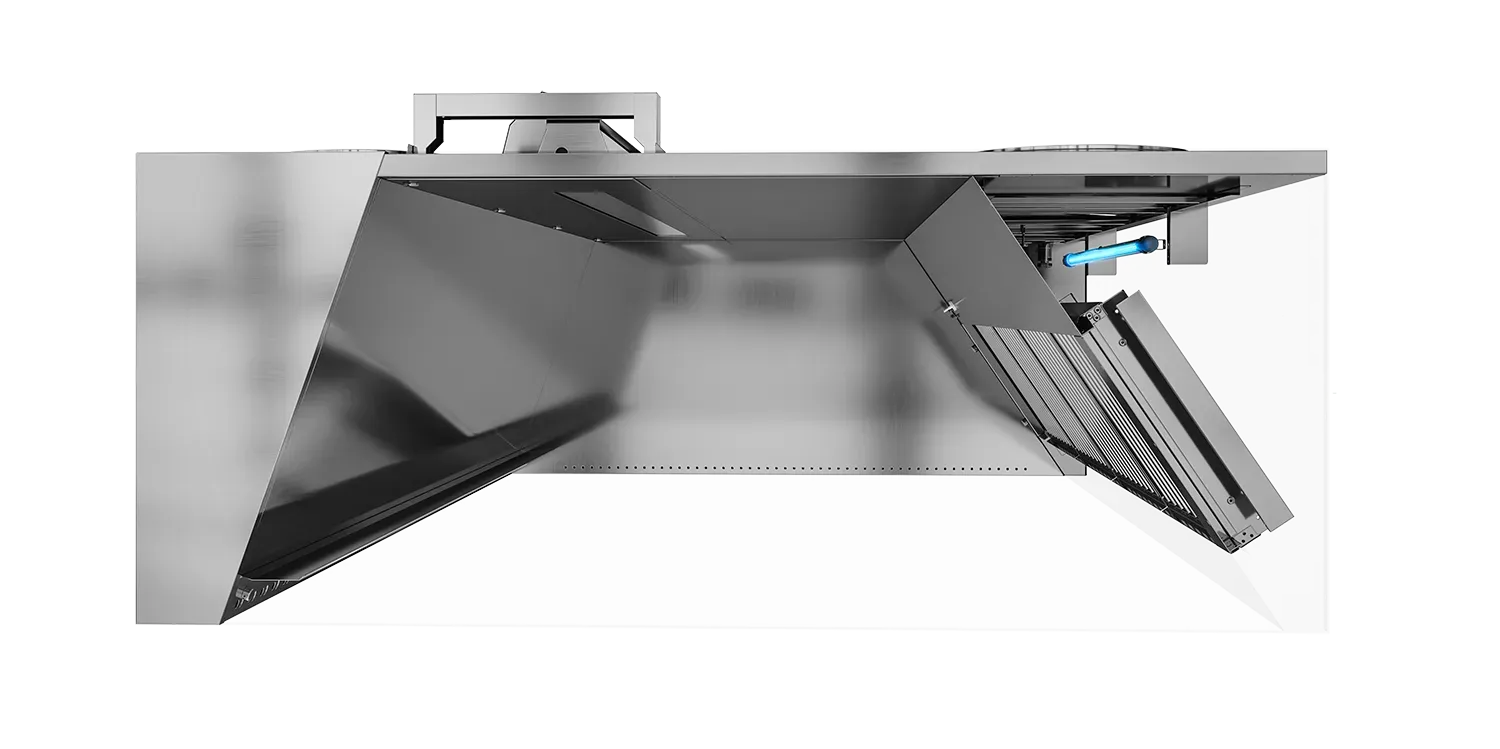
Professional kitchen exhaust air requires multiple complementary cleaning technologies to achieve high filtration rates and reduce maintenance costs.
Achieving high levels of extract air cleanliness significantly reduces cleaning and maintenance expenses while enhancing fire safety. Professional kitchen environments present unique challenges due to diverse cooking methods, grease accumulation, humidity, and airborne contaminants. A single cleaning technology typically proves insufficient; instead, effective solutions combine multiple complementary approaches that address different aspects of air purification. Four primary cleaning technologies work together in modern systems. Mechanical and impact filtration efficiently removes large grease particles generated during cooking processes, though it struggles with smaller particles. UV-C light at 254 nm wavelength combats microorganisms, molds, fungi, and bacteria. Vacuum UV technology, operating at shorter wavelengths, excels at dissolving small grease particles into natural compounds like oxygen, carbon dioxide, and water while maintaining high UV intensity sufficient to keep extraction ducts clean. Ozone production through photochemical reactions further enhances filtration by dissolving remaining grease particles and deodorizing air within ducts. Climecon has pioneered safe UV cleaning technology for professional kitchens since the early 2000s, implementing dual safety mechanics in their equipment.